After-hours answering service: how to catch every night and weekend call
Your options for answering calls at night and on weekends, what each one costs, and the exact setup for emergencies, bookings and messages in a trade business.
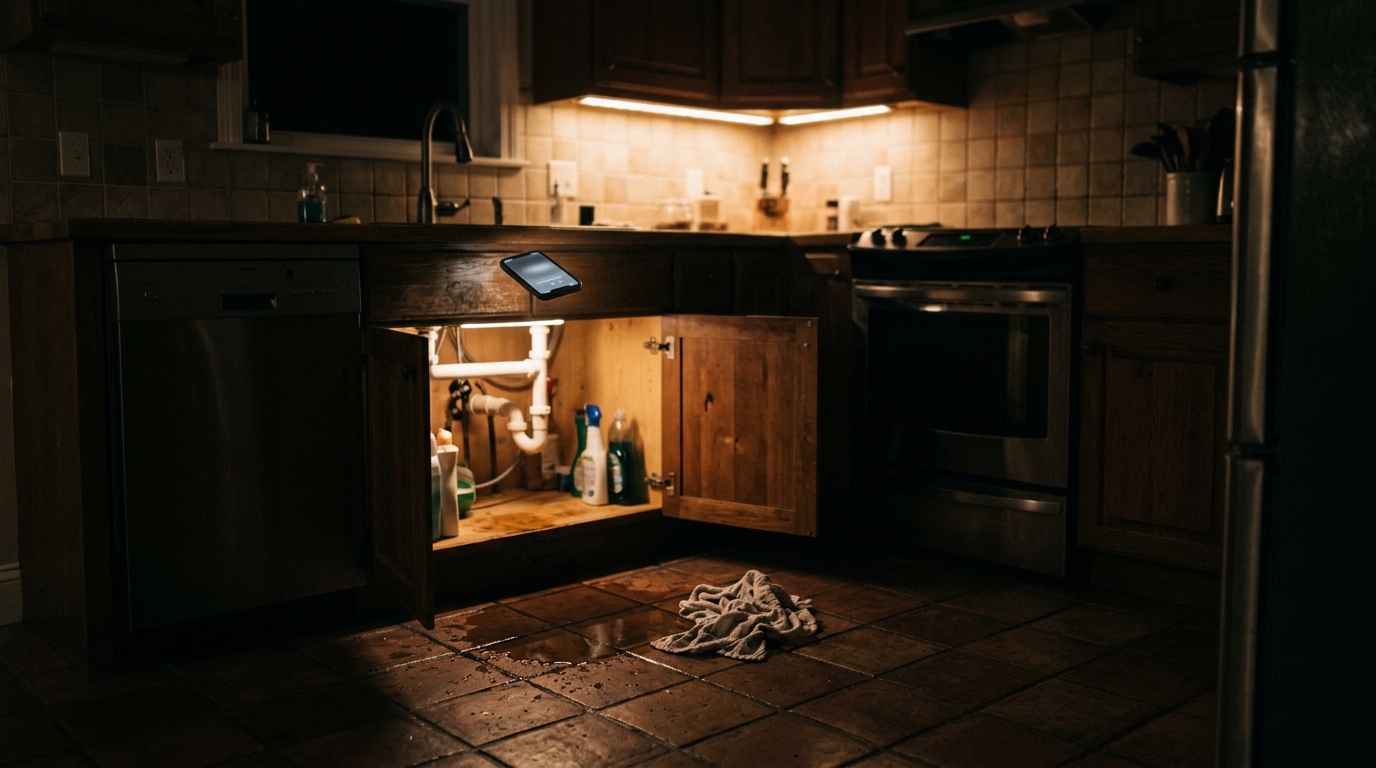
Short answer: an after-hours answering service picks up when your office is closed, so a caller at 9 pm on a Saturday talks to someone instead of a voicemail box. You can use a live call center, an AI receptionist or a mix. Whatever you pick, decide three things first: what counts as an emergency, what happens with one, and where every other message goes.
Why after-hours calls matter more than they look
If your office is open 8 to 6, Monday to Friday, that's 50 hours of a 168-hour week. The other 118 hours are when water heaters fail, furnaces quit on the first cold night and cars get rear-ended on the way home.
Those callers aren't browsing. They have a problem now, and if your voicemail picks up they call the next company on the list. A night call is often the most valuable call of the week: an urgent job, a customer who isn't shopping on price, and a customer who will remember who answered.
Your five options
| Option | How it works | Typical cost | Good for | Watch out for |
|---|---|---|---|---|
| Voicemail | Callers leave a message | Free | Very low call volume | Most urgent callers hang up and call someone else |
| Owner's cell or on-call phone | Calls forward to a person | Free, plus burnout | Small teams with emergency work | Missed calls during jobs, sleep, family time |
| Live answering service | A call center answers with your script | Monthly minute bundles, often $250 or more | Message taking, simple scheduling | Per-minute overage, rounding, extra fees |
| AI receptionist | AI answers every call, books and flags emergencies | Monthly plan with minutes, from about $149 | Booking, emergencies, 24/7 coverage | Setup quality decides the result |
| Mix | Team answers in hours, AI or a service at night and on overflow | Combination | Most trade businesses | Clear rules for the handoff |
For a sense of live pricing: Ruby, a well-known virtual receptionist service, lists $250 a month for 50 minutes, $395 for 100, $720 for 200 and $1,725 for 500 on its pricing page. We compare the options in detail in how much an answering service costs.
What to set up before you switch it on
Decide what counts as an emergency
Write the list down. It's what your answering service or AI will listen for.
- HVAC: no heat in freezing weather, no cooling in extreme heat for an elderly or sick person, a system making burning smells.
- Plumbing: burst or leaking pipe that won't stop, sewage backing up, no water at all, water heater leaking.
- Electrical: sparking outlets, burning smell, power out to part of the house.
- Locksmith: locked out with a child or pet inside, broken lock on an entry door.
- Towing: stranded on a highway or in an unsafe place.
- Auto body and repair: an accident, a car that isn't drivable.
One rule comes before everything else. If the caller smells gas, sees fire or anyone is hurt, the answer is "leave the building and call 911 or your gas company now", not a booking.
Decide what happens with an emergency
Pick one path and write it down:
- alert the on-call technician right away by phone or team chat,
- transfer the call live to the on-call person,
- or book the soonest opening and alert the team.
If you charge an emergency or after-hours fee, say the number in the script so every caller hears the same thing.
Decide what can be booked overnight
Most businesses let non-urgent jobs book straight into the next open time: maintenance, estimates, routine repairs. Set which job types can be booked, how far ahead and which hours are open, and keep the rest as call-back requests.
Collect the same details on every call
- name and call-back number,
- address or ZIP code,
- what's wrong, in the caller's words,
- how urgent it is,
- for vehicles: year, make, model and whether it drives,
- how they found you.
Write the greeting
A short greeting that tells the caller they reached the right place and what will happen:
"Thanks for calling Smith Plumbing. Our office is closed, but I can help you right now. Is this an emergency, or would you like to book a visit?"
Send every message to one place
A voicemail box nobody opens until 10 am is where night leads go to die. Every after-hours call should end up in one list your team works through first thing in the morning, with emergencies pushed to the on-call person right away.
How to forward your calls after hours
You don't need a new number. Most carriers offer call forwarding that you can turn on at night, or "conditional" forwarding that sends only the calls you don't answer. Many businesses use conditional forwarding all day: the team picks up when they can, and the answering service or AI gets the rest.
What it costs: a quick example
Say you get 60 after-hours calls a month and they average 3 minutes. That's about 180 minutes.
- Live answering service: a 200-minute bundle at Ruby's listed price is $720 a month.
- AI receptionist: QuickVOC's Starter plan is $149 a month and includes 300 AI minutes, so the night calls fit inside the plan, and the same AI also covers calls your team misses during the day.
Prices from the providers' public pages as of October 2026. Check them before you decide.
How QuickVOC answers after-hours calls
QuickVOC's AI receptionist answers every call, day and night, and writes each one into the CRM as a lead:
- Bookings: it offers open times from your hours or your Housecall Pro schedule and books only when the caller says yes.
- Emergencies: you set your urgent words. When a caller uses one, the AI collects the details, offers the soonest opening or takes a message, and alerts you on Telegram right away. It never dispatches anyone on its own.
- A real person: if the caller asks for a person and your team is on duty, the AI transfers the call. Outside your hours it takes the details and sets a follow-up for the morning.
- Your team first: during work hours, calls ring your team in the browser first and the AI takes the ones nobody answers. See phone and SMS.
- Every call written down: recording, transcript and a short summary on the lead.
- Spanish and other languages: the AI switches to the caller's language. See 15 languages.
See how it works for HVAC, plumbing and locksmiths.
Sources
Questions
Something else on your mind? Talk to us.
What does an after-hours answering service cost?
Can an AI receptionist handle emergency calls?
Can I keep my business phone number?
Should I charge more for after-hours calls?
What should happen to non-urgent calls at night?
Keep reading.

How much does an answering service cost? Real prices compared
A receptionist, a live answering service or an AI receptionist: what each one really costs per month, worked out for the same number of calls, and the fees that don't show on the pricing page.
Oct 24, 2026
Google Guaranteed is now Google Verified: what changed for local service ads
Since October 2025 Local Services Ads show one badge: Google Verified. The money-back guarantee is gone, and in 2026 Local Services Ads move into Google Ads. Here is what it means for your leads.
Oct 24, 2026
Speed to lead: why the first five minutes decide the job
The business that calls back first often books the job. What the research on lead response time says, how to measure your own, and a playbook a small team can run.
Oct 24, 2026